
You wash your wheels and notice a cloudy white patch spreading beneath the shiny face. Or a curb scrape has left a rough silver line across a wheel that used to have crisp, fine-cut reflections. If the wheel is diamond-cut, a quick colour touch-up will not recreate that finish.
Diamond-cut wheels combine a machined metal face with a protective clear coat. Once that coat is breached, moisture can reach the metal and the mark can spread beneath the finish. Here is how to recognize the problem, what a proper refinish involves, and when another finish may make more sense for a BC driver.
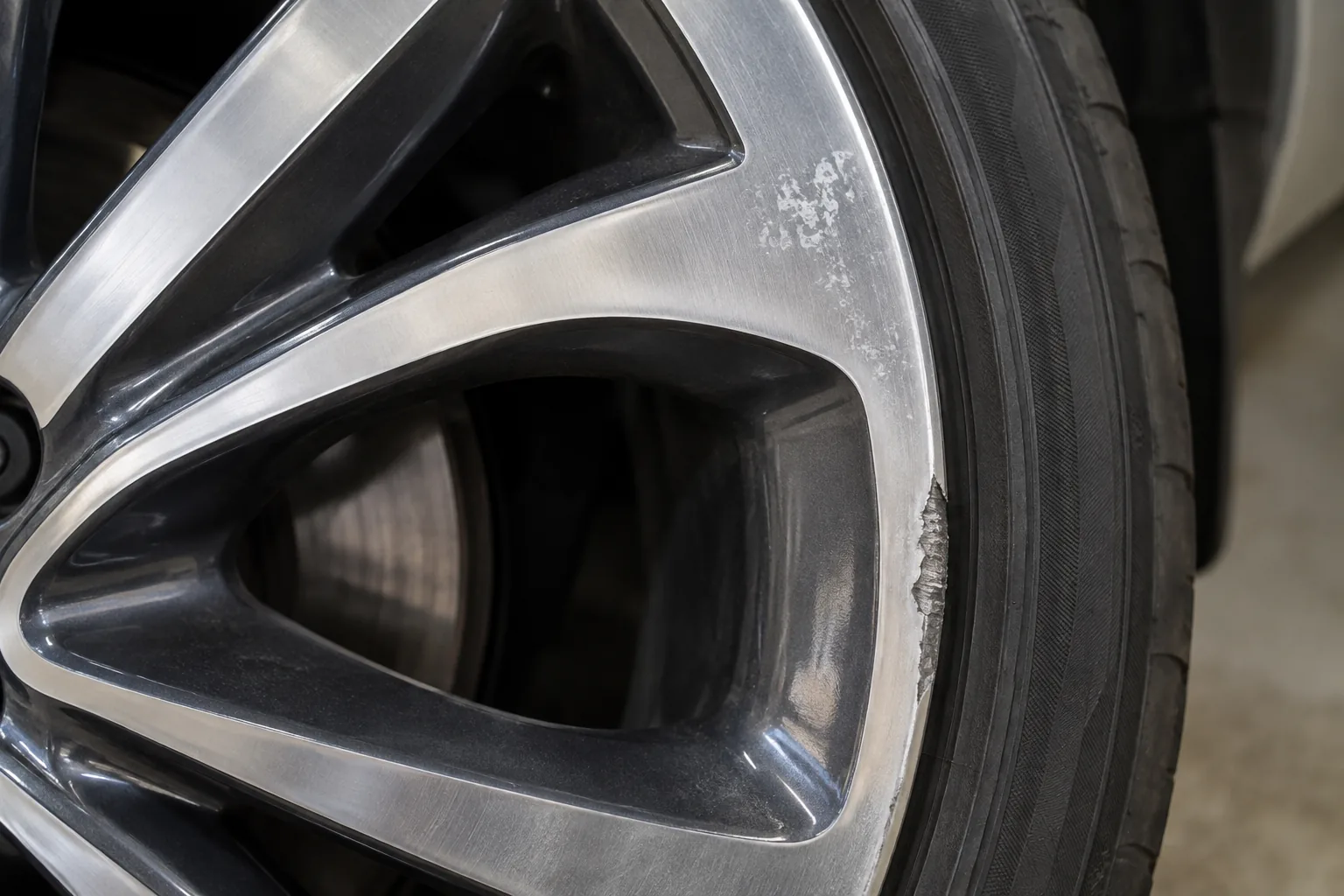
Illustrative image of finish damage; it does not show a Western Wheelcraft customer wheel.
How to tell if your wheel is diamond-cut
Look for a bright, reflective face with very fine circular machining lines. The pockets or sides of the spokes may be painted a contrasting colour, while the front surface shows exposed, machined alloy beneath clear coat. A uniformly painted silver wheel can look similar from a distance, so check your vehicle's wheel specification or ask a refinisher if you are unsure.
The distinction matters because paint can reproduce a colour, but it cannot reproduce the cut pattern and changing reflection of machined metal. The Opel/Vauxhall alloy-wheel refurbishment guide describes diamond cutting as turning the wheel with a precision tool to create that reflective surface, then protecting the finish with clear coat.
Why white corrosion appears under the clear coat
The clear coat protects the machined aluminum from moisture and road contamination. A curb scrape, stone chip, or damaged coating edge can break that seal. In wet Lower Mainland conditions, moisture can work under the coating and leave a milky or white-looking patch. Cleaning the surface may remove brake dust, but it will not remove corrosion trapped below an intact-looking layer of clear coat.
Not every white mark is corrosion. Dried cleaner or mineral deposits can sit on top of the finish. Try a gentle wash with a wheel-safe cleaner and a soft mitt. If the mark stays under the coating, or the clear coat is lifting, ask for a refinishing assessment rather than scrubbing harder.
What diamond-cut refinishing involves
The exact process depends on the wheel and the damage. In general, a technician inspects the wheel and tire, removes the damaged finish, prepares or repaints the coloured areas where needed, cuts the face on a CNC lathe, and applies a new protective clear coat. The wheel is then checked before it goes back on the vehicle.
There is a limit to how much material can be removed. A wheel that has been cut before, has deep gouges, or shows structural damage may not be suitable for another cut. The vehicle or wheel manufacturer's repair rules also matter. The right answer may be a different finish or replacement, not another pass on the lathe.
Western Wheelcraft lists diamond-cut refinishing among its services at its Burnaby facility. We can assess your wheel's finish and damage before recommending a route.
Re-cut, repaint, or replace?
| Condition | Likely next step |
|---|---|
| Light curb rash on an otherwise sound diamond-cut face | Ask whether a controlled re-cut and clear coat are permitted for that wheel |
| White corrosion beneath the clear coat | Assess how far it has spread and whether the face can be refinished |
| Several previous re-cuts or deep metal loss | Consider a painted or powder-coated finish, if the wheel is sound and the manufacturer permits it |
| Crack, deformation, or other structural concern | Stop using the wheel until it is inspected; replacement may be required |
Changing to a painted or powder-coated finish can avoid repeating the machined-face look, but it changes the appearance. If you want the original design, ask for diamond-cut refinishing first. If you are deciding between applied finishes for a full set, our powder coating versus painting guide explains the trade-offs.
What affects the price?
There is no useful flat rate for every diamond-cut wheel. A quote depends on wheel size and design, how far the corrosion has travelled, the depth of curb damage, whether the painted pockets also need work, and whether the wheel has been refinished before. Any tire or structural issue is a separate consideration.
For a useful first quote, send a photo of the full face plus close-ups of the damage, and include your vehicle's year, model, and wheel size. Use our photo quote estimator; we will tell you if the wheel needs an in-person assessment before a final recommendation.
How to care for the repaired finish
- Wash brake dust off regularly with a soft mitt and a cleaner approved for your wheel finish.
- Rinse cleaner thoroughly and avoid abrasive pads around the cut face.
- Check the edge of the clear coat after any curb contact or stone chip.
- Ask for an assessment when you notice lifting clear coat or a white patch spreading beneath it.
FAQ
Can white corrosion be polished away? If the white mark is beneath the clear coat, surface polish cannot reach it. A professional needs to assess whether refinishing is possible.
Can you repair just the scratched spot? A local touch-up may hide a small mark, but it usually cannot recreate the continuous machined pattern across the face. Ask what result is realistic for your wheel.
Can a diamond-cut wheel be refinished more than once? Sometimes, but each cut removes a small amount of metal. Prior work, damage depth, wheel design, and manufacturer limits determine whether another cut is acceptable.
Ready to fix your wheels?
Snap a photo, get a price in minutes — or lock in a repair date now.