
A hard pothole hit can leave a wheel looking normal while the car feels different. You might notice a new vibration on the highway, a tire-pressure warning, or a thump that was not there yesterday. Those are reasons to check the tire and wheel promptly, not proof that the rim is bent. An out-of-balance tire, damaged tire, or other suspension problem can feel similar.
Here is what to look for after a pothole impact in Vancouver or the Lower Mainland, and how to decide what to do next.
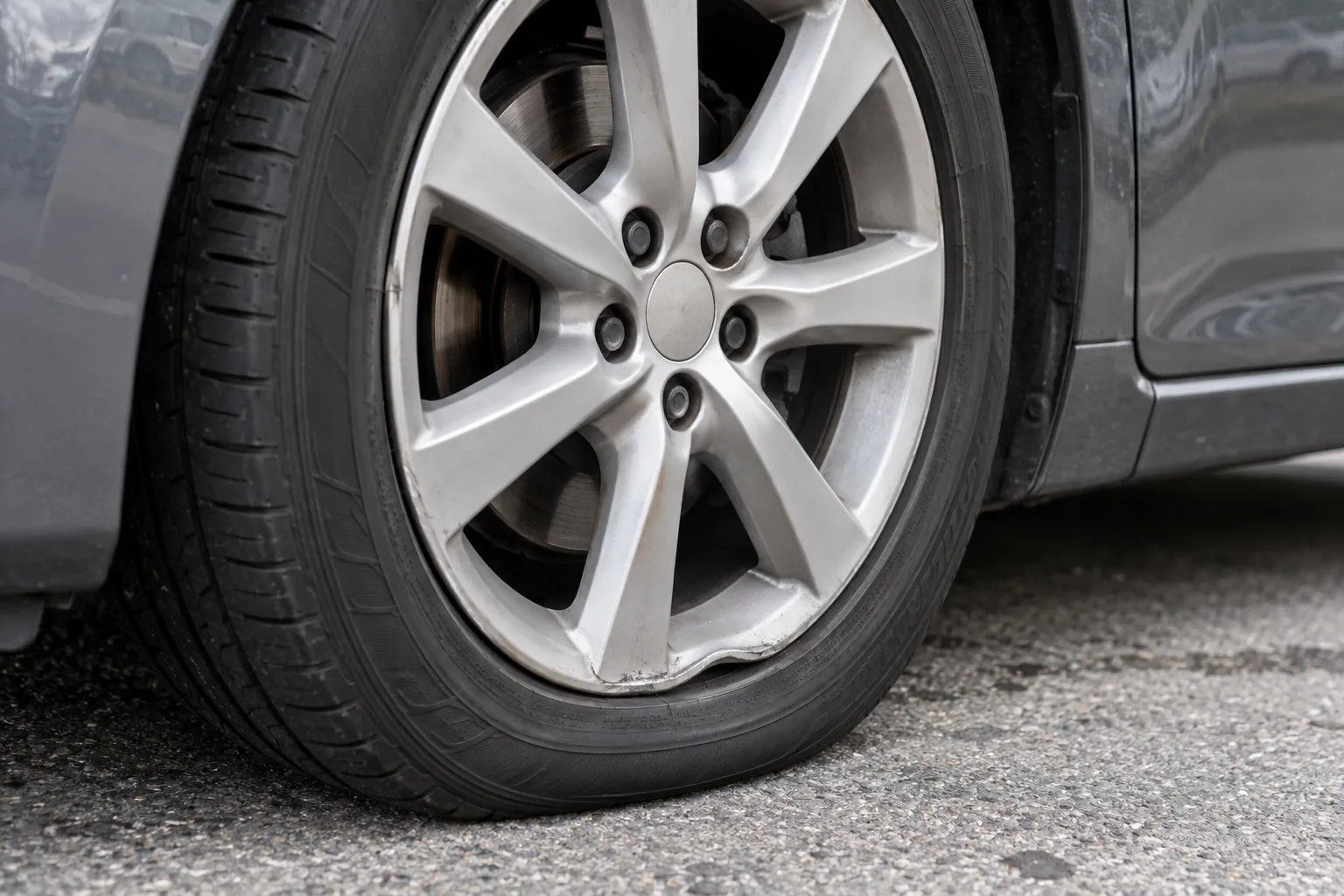
Illustrative image of rim damage; a photo cannot determine whether a wheel is safe to use.
First, check whether it is safe to continue
Pull over somewhere safe if the car starts pulling strongly, the steering changes suddenly, you hear repeated thumping, or a tire-pressure warning appears. Look at the tire from a safe position. Do not keep driving on a visibly flat tire, a tire with a sidewall bulge, or a wheel with a visible crack. Michelin Canada advises against driving on a tire with a sidewall bulge. Arrange roadside assistance or a professional inspection instead.
If the tire appears inflated and the car feels normal, that still does not rule out damage. Check tire pressure against your vehicle's recommended setting, inspect the wheel's outer lip, and arrange an inspection if the impact was severe. The inner barrel can be damaged where you cannot see it with the wheel mounted.
Common signs of a bent rim
| What you notice | What it may mean | What to do |
|---|---|---|
| New steering-wheel or seat vibration | The wheel and tire may be out of balance, the rim may be distorted, or the tire may be damaged | Have the full wheel-and-tire assembly checked |
| Tire pressure drops again after inflation | A damaged tire, valve, or wheel-to-tire seal may be leaking | Have a tire shop locate the leak; do not assume the rim is the cause |
| Visible flat spot or wobble at the wheel lip | Possible wheel deformation | Avoid further driving until a technician inspects it |
| Sidewall bulge, cut, or exposed cords | Tire damage that may need replacement | Do not drive on the affected tire |
Vibration alone is not a diagnosis. Continental explains that an imbalanced wheel-and-tire assembly can cause vibration, and potholes can deform wheels. A shop can check the tire, balance, wheel runout, and nearby suspension parts to find the actual cause.
Can a bent alloy wheel be repaired?
That depends on the wheel, where and how it is damaged, and the vehicle manufacturer's rules. Cosmetic curb rash and structural deformation are different jobs. A wheel that only has a scraped finish may be a refinishing candidate; a bent, cracked, or heavily corroded wheel needs a safety assessment before anyone talks about appearance.
Manufacturer guidance is particularly important here. For example, Toyota's wheel guidance says bent or cracked wheels should be replaced and says Toyota does not recommend straightened bent wheels. Volvo's wheel guidance likewise warns against using damaged, cracked, deformed, or repaired rims. Follow the guidance for your vehicle and wheel. A repair shop should never promise that an impacted wheel is safe based on a photograph alone.
If the wheel must be replaced, match the replacement to the vehicle's approved specifications, including diameter, width, offset, and load rating. Ask the shop to inspect the tire too; a new wheel does not fix an impact-damaged tire.
What an inspection should cover
A useful assessment goes beyond the scuff you can see. The technician should check:
- The tire's tread and both sidewalls for impact damage or a bulge
- Tire pressure and the source of any air leak
- The inner and outer wheel lips and barrel for cracks or deformation
- Whether the wheel runs true and the wheel-and-tire assembly balances correctly
- Suspension and alignment if the car pulls or the steering remains off-centre
The result might be a tire repair, tire replacement, wheel replacement, balancing, or cosmetic refinishing. Those are different fixes for different problems.
Get the right quote, not a guess
For a first look, send clear photos of the whole wheel, the damaged area, the tire sidewall, and any visible tire-pressure warning through our photo quote estimator. Tell us your vehicle's year and model, which wheel hit the pothole, whether pressure is dropping, and whether you feel vibration. Photos help us advise on the next step, but an in-person inspection may be needed before any structural decision.
Western Wheelcraft's Burnaby shop serves Vancouver and the Lower Mainland. If your wheel is suitable only for cosmetic repair, see our curb rash cost guide for the factors that affect refinishing prices.
FAQ
Can a bent rim cause a slow leak? Yes, damage where the tire seals against the wheel can cause air loss. So can a puncture, damaged valve, or corrosion. A tire shop needs to locate the leak before recommending a fix.
Does vibration always mean the rim is bent? No. Tire imbalance and tire or suspension damage can also cause vibration. Have the whole assembly checked.
Can I drive if the rim looks fine? Appearance alone cannot confirm safety after a hard impact. If pressure drops, the tire has a bulge, the wheel is cracked, or the vehicle handles differently, stop driving and arrange professional help. If you are unsure, have it inspected before your next long drive.
Ready to fix your wheels?
Snap a photo, get a price in minutes — or lock in a repair date now.